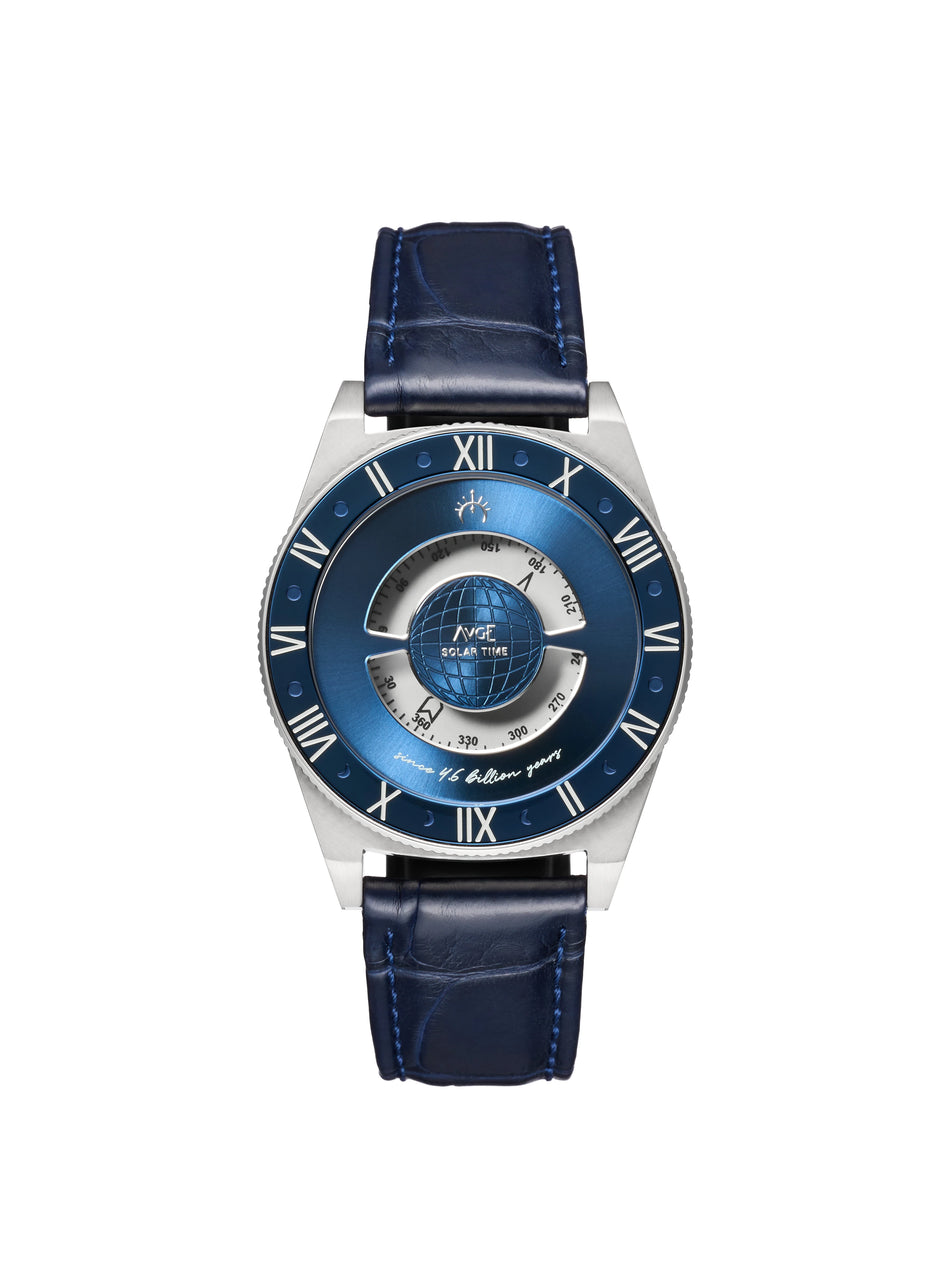
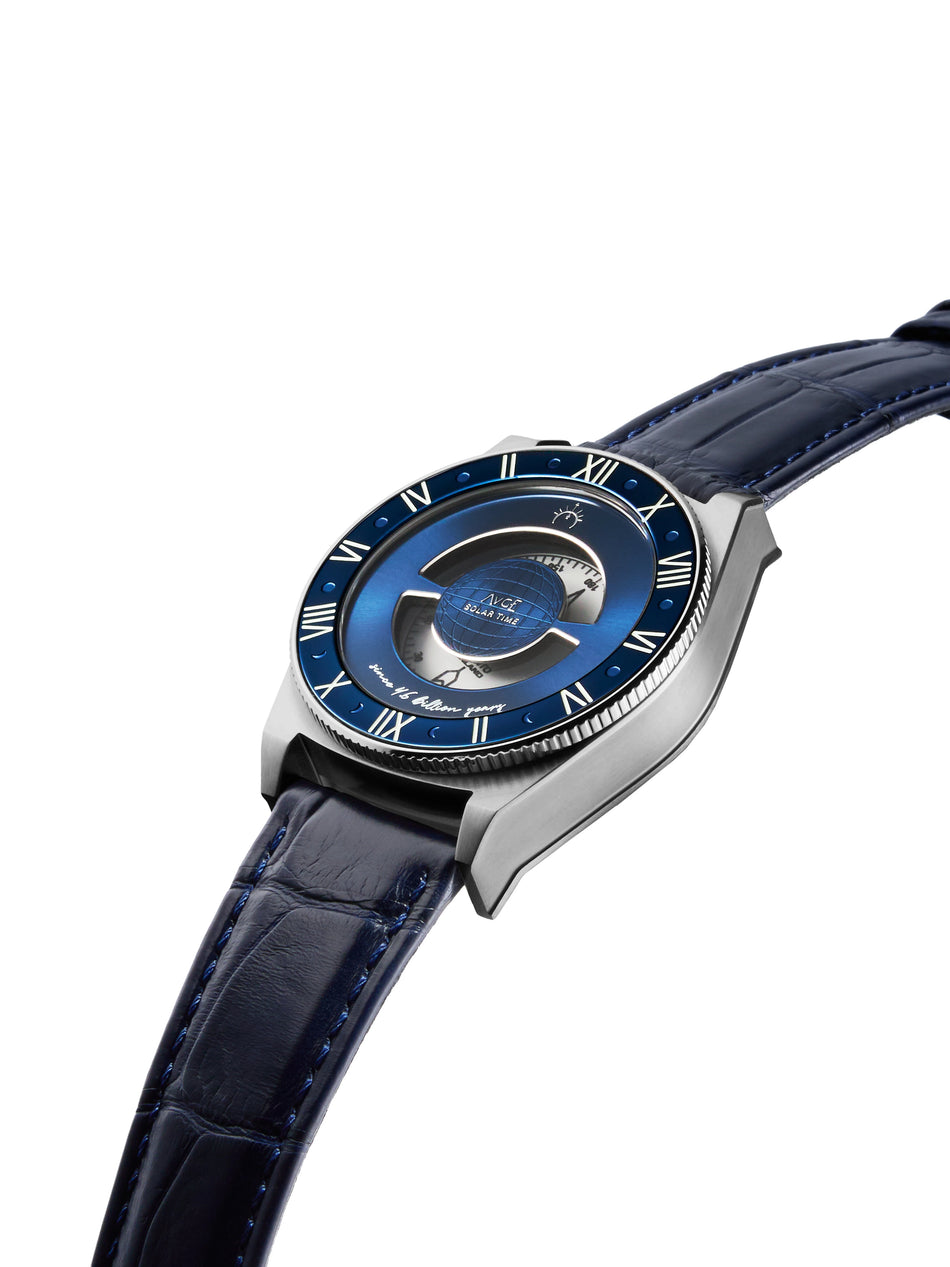
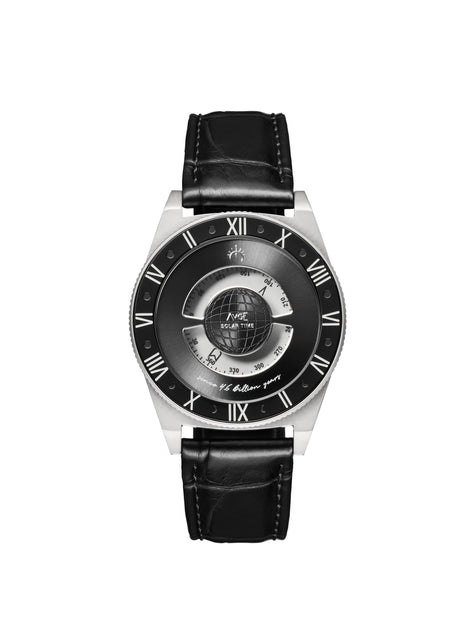
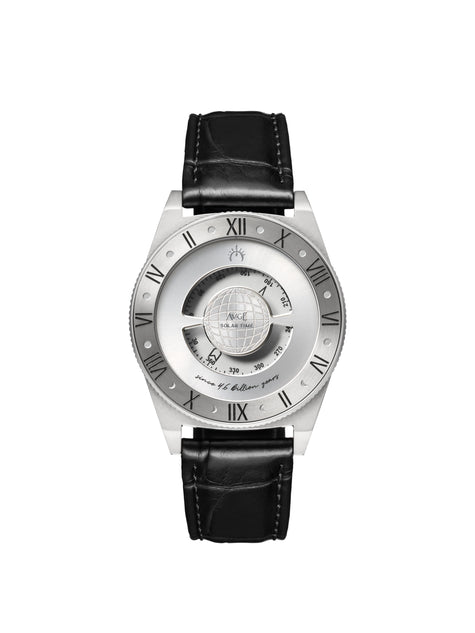
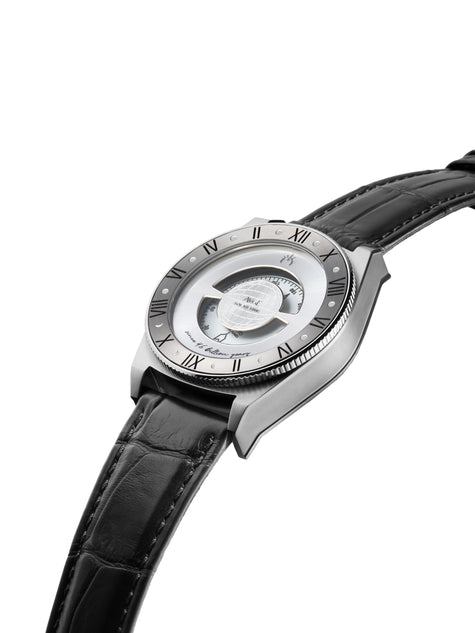


Il existe des montres qui donnent l’heure. Et puis il existe des objets plus rares, qui attendent que le monde s’ouvre pour révéler le temps.
La boussole horlogère de luxe appartient à cette seconde catégorie. Elle ne force rien. Elle n’impose aucune information. Elle reste silencieuse, immobile, jusqu’au moment où le porteur accepte de regarder le paysage, de prendre le soleil comme repère, et de s’orienter dans le réel.
Alors seulement, l’aiguille prend vie. Le temps apparaît.
C’est cette prouesse, à la fois poétique et horlogère, qui a donné naissance à la Maison Augé, première maison de luxe dédiée au temps naturel.
Un instrument qui révèle le temps plutôt qu’il ne l’impose
La boussole horlogère de luxe repose sur une idée simple et radicale : le temps existe déjà dans la nature, inutile de le fabriquer artificiellement.
Depuis l’origine du système solaire, le soleil semble parcourir l’horizon à un rythme constant, quinze degrés par heure. Ce mouvement apparent, immuable depuis 4,6 milliards d’années, est le véritable cadran du monde.
Augé a choisi de ne pas reproduire ce phénomène par des rouages mécaniques, mais de l’interpréter directement, en s’appuyant sur les repères naturels les plus fondamentaux : la lumière du soleil et l’orientation de la Terre.
L’aiguille magique : quand la nature devient mécanisme
Au cœur de la boussole horlogère de luxe se trouve une boussole de très haute précision. Cette aiguille, parfaitement immobile tant qu’elle n’est pas sollicitée, ne donne aucune information par elle-même.
Elle attend.
Lorsque la montre est posée à plat et orientée vers le soleil, l’aiguille s’aligne sur les pôles magnétiques terrestres. En comparant cet axe fixe avec la position de l’astre, elle vient indiquer l’heure sur une lunette solaire gravée.
Ce n’est pas l’aiguille qui calcule le temps. C’est la nature qui l’exprime.
La montre devient alors un interprète, un traducteur discret entre le paysage et le porteur.
Penser comme la nature pour lire le temps
Pour comprendre la nature, il faut accepter de penser comme elle. Pas de mouvement inutile. Pas de complexité artificielle. Seulement des lois simples, stables, répétables.
La boussole horlogère de luxe adopte ce même principe. Son mécanisme est volontairement épuré, ultra low-tech, libéré de toute dépendance énergétique ou électronique.
La lecture du temps n’est plus un réflexe passif, mais un acte conscient. Un geste qui engage le corps, le regard et l’attention.
Le luxe comme précision, durée et humilité
Dans une boussole horlogère de luxe, le luxe ne réside pas dans l’accumulation de complications, mais dans la justesse.
Justesse des matériaux, choisis pour leur stabilité et leur durabilité. Le titane Grade 5, neutre magnétiquement, garantit que rien ne perturbe l’aiguille. Le verre saphir antireflet laisse passer la lumière sans altération. Le cadran en émail capte les reflets du soleil.
Justesse du dessin, pensé pour rester lisible dans un siècle comme aujourd’hui. Justesse de l’intention, qui consiste non pas à dominer le temps, mais à l’accompagner.
À qui s’adresse une boussole horlogère de luxe
Elle s’adresse à celles et ceux qui savent que le temps ne se réduit pas à une donnée numérique.
Aux explorateurs et navigateurs, pour qui l’orientation et les repères naturels restent essentiels. Aux contemplatifs exigeants, qui recherchent des objets porteurs de sens et non de distraction. Aux amateurs de gestes anciens, conscients que certaines connaissances traversent les millénaires sans perdre leur valeur.
Un point de bascule silencieux
Nous vivons entourés de richesse, sans toujours en avoir conscience. La nature, le miracle même de la vie sur Terre, demeure notre bien le plus précieux.
Chaque seconde, le temps orchestre silencieusement le spectacle du vivant. Mais nous avons appris à le mesurer sans plus le regarder.
La boussole horlogère de luxe est née de ce décalage. Non pour rejeter la modernité, mais pour réintroduire un lien direct avec le monde réel, en réconciliant observation, compréhension et contemplation.
Augé et le temps naturel
La Since 4.6 Billion Years porte le nom de l’âge du système solaire. Depuis cette origine lointaine, la Terre tourne, le champ magnétique se maintient, le soleil poursuit sa course apparente.
En associant observation astrale et physique magnétique, Augé a conçu une boussole horlogère de luxe capable de révéler l’heure solaire, partout au nord de l’équateur, sans batterie, sans rouages périssables, sans artifice.
Un objet conçu pour survivre à ses porteurs, et continuer de donner l’heure tant que le soleil se lèvera à l’horizon.
Reconnectons avec l’art de contempler le temps.
En savoir plus